For my computer science undergraduate
research project, I explored the use of
Sequential Linear Paths(SLP)
global planning
to improve Deep Deterministic Policy
Gradient(DDPG) reinforcement learning
for robot path planning. The goal of the
project was to develop a novel path
planning algorithm that could efficiently
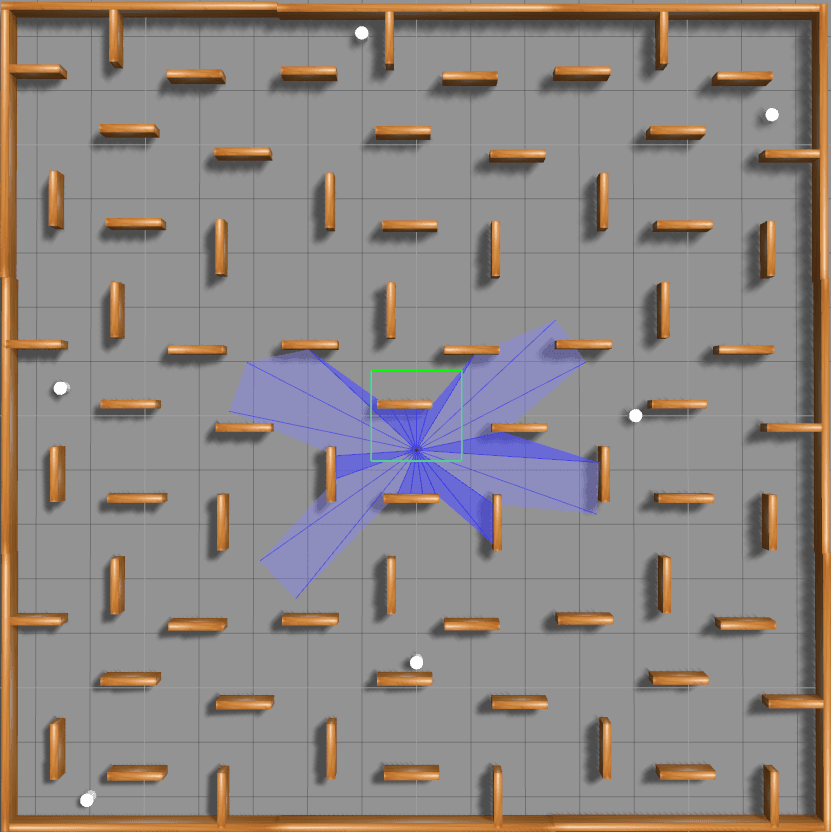
navigate a robot in complex environments.Our experiments were conducted using ROS,
Turtlebot3 Burger,
and Gazebo
simulation environments.
Project Details
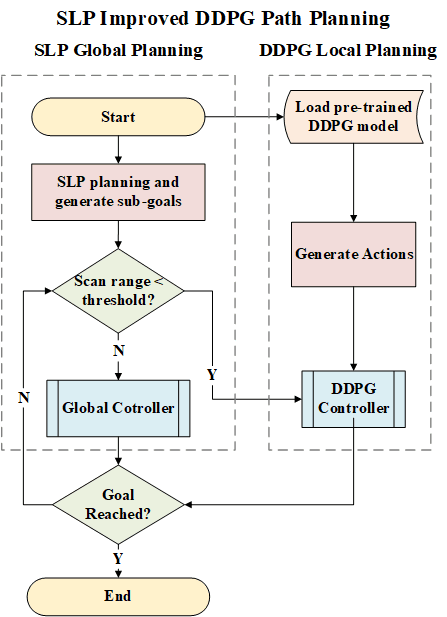
The project consisted of two main parts:
global planning using SLP and local
planning using DDPG. For the global planning,
we used the SLP algorithm proposed in the
paper "Enhancing Path Quality of Real-Time
Path Planning Algorithms for Mobile Robots:
A Sequential Linear Paths Approach"
by Fareh et al. The
SLP algorithm generated a global path
for the robot based on a given map and
goal location.
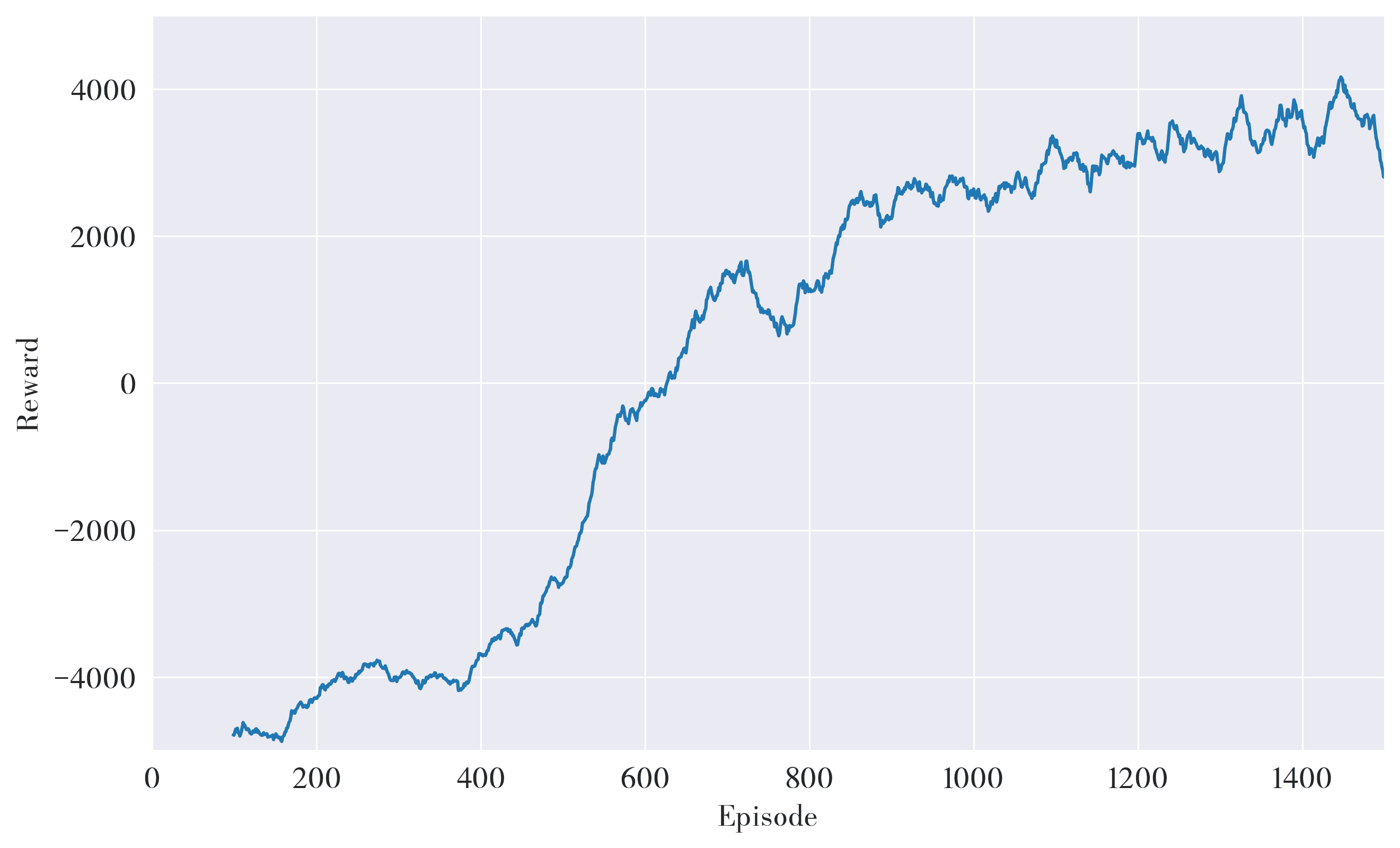
For the local planning, we used the
DDPG reinforcement learning algorithm,
which is a model-free, off-policy
algorithm that can learn to control a
robot's motion by directly mapping sensor
readings to actions. We used the DDPG
algorithm to refine the global path
generated by the SLP algorithm,
allowing the robot to navigate around
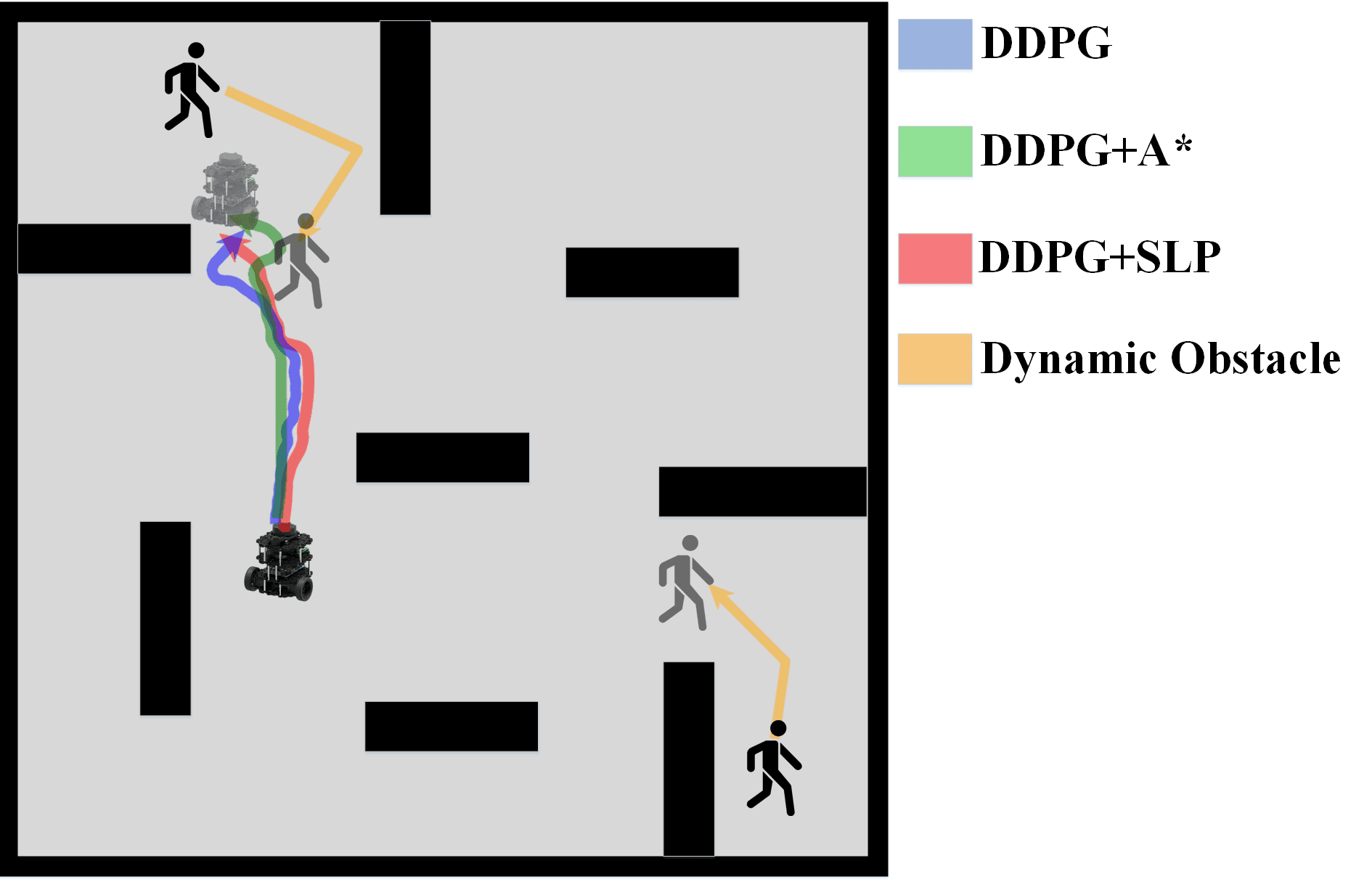
obstacles and reach its goal.We evaluated our novel
path planning algorithm using a
simulated robot in various environments,
including open spaces and cluttered
environaments. We compared our algorithm's
performance with that of other
state-of-the-art path planning algorithms.
Results
Our novel path planning algorithm
achieved promising results in various
environments, outperforming other
state-of-the-art algorithms in some scenarios.
We found that the combination of SLP global
planning and DDPG reinforcement learning
allowed the robot to navigate efficiently
and effectively in complex environments
while avoiding collisions with obstacles.
Conclusion
Our research project demonstrated
the effectiveness of using SLP global
planning to improve DDPG reinforcement
learning for robot path planning. Our
novel path planning algorithm can efficiently
navigate a robot in complex environments,
making it a valuable tool for various
applications, such as autonomous vehicles,
mobile robots, and unmanned aerial vehicles.Our research paper has been
published in the Sensors
journal, and we hope that our work will inspire
further research in this area.