BitHunter: Leveraging LLMs for Cryptocurrency Trading Insights
May 2, 2025
project lapse time: 2025-02-01 - 2025-05-02
Introduction
The BitHunter project investigates the application of Large Language Models (LLMs) for analyzing diverse textual data sources, including news articles, social media posts, and online forum discussions related to cryptocurrencies. The primary goal is to extract actionable trading signals—such as "buy," "sell," or "hold"—based on sentiment analysis derived from this unstructured text. This initiative centered on developing a Minimum Viable Product (MVP) to prove the concept of converting LLM-generated insights into trading decisions. The system was initially tested using simulated and historical data within a comprehensive backtesting framework, featuring a modular architecture designed for safe testing and to accommodate future enhancements like live data streams and more sophisticated algorithms.
Project Details
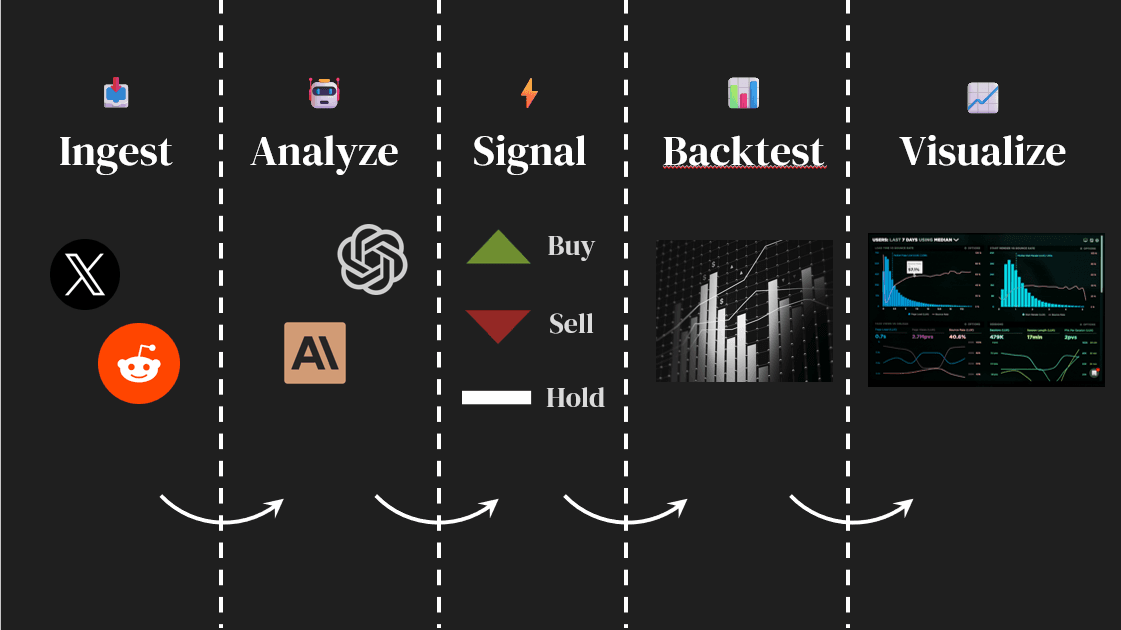
The BitHunter system is built upon several interconnected modules:
Data Ingestion: This module is responsible for fetching historical cryptocurrency price data and relevant news. For initial development and safety, it utilizes historical and simulated datasets.
LLM Sentiment Analysis: This component processes the collected textual data to assess market sentiment. In the MVP stage, it employs keyword-based heuristics as a preliminary step towards full LLM integration (e.g., using GPT API or similar services).
Signal Generation: Based on the sentiment scores from the LLM analysis and potentially other analytical indicators, this module generates concrete trading signals (Buy/Sell/Hold).
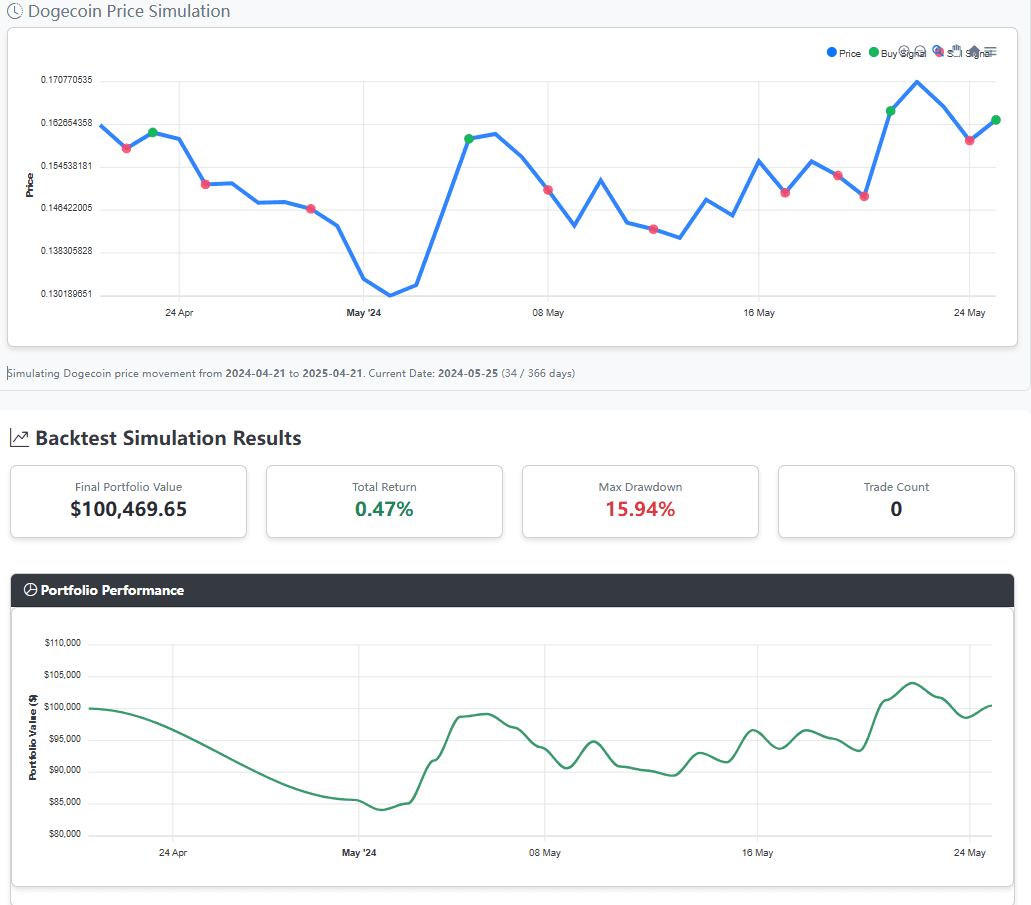
Backtesting Engine: This crucial module simulates the execution of the generated trading signals against historical price data. This process helps evaluate the potential performance and risks associated with the trading strategy.
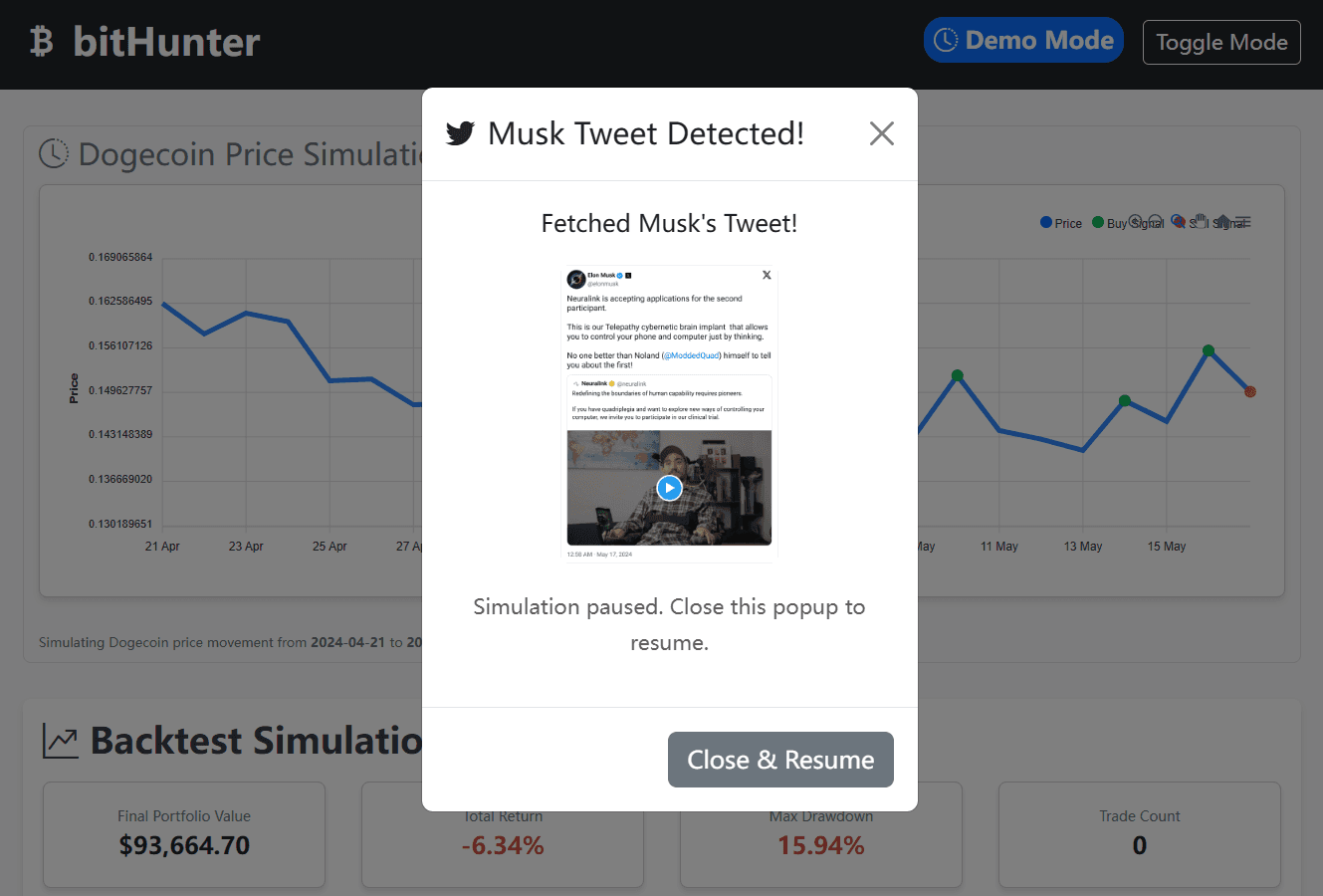
Dashboard: A user-friendly web-based interface, developed using Flask, visualizes the ingested data, the generated trading signals, and the results from the backtesting engine, offering a clear overview of the system's operations.
The following diagram illustrates the workflow of the BitHunter system:
Implementation and Results
All core modules of the BitHunter system were successfully implemented as outlined in the architecture.
The data ingestion module effectively handled historical datasets, while the sentiment analysis module provided simulated sentiment scores for development.
The signal generator then produced trading decisions based on these scores, which were subsequently processed by the backtesting engine.
The dashboard provided an effective visualization of this entire process and its outcomes using the simulated data.Below are some visual representations of the system in action using simulated Dogecoin price data:
Conclusion and Future Enhancements
The BitHunter project successfully demonstrated the feasibility of creating an MVP that translates text analysis (simulated LLM) into trading signals and evaluates them through backtesting.
This lays a strong foundation for future development.Key learnings from this project include the critical importance of modular design in complex systems and the significant benefits of starting with simulated data for iterative development and testing core logic before integrating live systems.
The project also underscored the complexities involved in translating qualitative sentiment into quantitative, reliable trading signals.Future enhancements for BitHunter could include:
Live Data Integration: Connecting the system to real-time data APIs for cryptocurrency prices and news, alongside integrating live LLM APIs for dynamic sentiment analysis.
Algorithm Refinement: Incorporating more sophisticated technical indicators and market data into the signal generation logic. This also involves optimizing LLM prompts and analysis techniques for higher accuracy.
Advanced Risk Management: Implementing more robust risk management rules within both the backtesting engine and any potential live trading modules.
Dashboard Improvements: Enhancing the dashboard with more interactive charts, options for toggling real-time data, and more in-depth performance analytics.
Exploring Reinforcement Learning: Potentially investigating the use of reinforcement learning techniques for optimizing trading decisions.
This project highlights a promising direction for leveraging AI in the financial technology space, specifically in cryptocurrency trading.
The modular architecture and foundational work provide a solid platform for these exciting future developments.